

Tuesday, December 27, 2005
Aslan is not Jesus
Julie and I are down in Austin, Texas this week for Christmas, and aside from a nasty sinus infection, it's been a good trip. I also got the chance today to visit with an old childhood friend, Michael Short, who is living down here now and is actually marrying an Austinite named Jen this coming Saturday. We had a delicious brunch at Kerby Lane Cafe (a uniquely Austin eatery) and caught up on each other's lives.
 Among other things, we talked a bit about the new Narnia movie, "The Lion the Witch and the Wardrobe" that opened a few weeks ago. On his blog Michael had quoted New Yorker columnist, Adam Gopnik, regarding the likeness of Aslan to Jesus in the Narnia books. While I get really frustrated with both Christian fans and secular journalists who make too much of the connection between Narnia and Christianity (Lewis himself said that Narnia is NOT an allegory of Christianity. Christians who want to read it that way misunderstand it. Not to mention the fact that all the religious hype regarding the movie I think has served to lessen the movie's deserved impact and acceptance with mainstream audiences.) there is admittedly a lot of Christian themes embedded in Narnia, and Aslan is certainly a Christ-figure. Gopnik makes the excellent point that Lewis doesn't actually do a very good job of translating the Jesus of the Gospels into the Aslan of Narnia. If Aslan were to enter Narnia for the same purpose and in the same way that Jesus came into our world, he should have looked and acted very different. Gropnik writes:
And of course, Gropnik is quite right. Jesus, in contrast to Aslan, is not a figure who saves his people through an exercise of violent power, he is the Suffering Servant who goes meekly to the cross and yet still prays forgiveness on those who persecute him and commands us to love our enemies. As my friend Michael points out, Christians should be very careful in using Narnia as a Christian allegory. When it comes right down to it, the message of Narnia is not quite the Christian message (though it bears some similarities). Perhaps we as Christians should be just as quick to help others see those points where Narnia doesn't reflect our faith as we are to point out the similarities, so as not to risk misrepresenting the Jesus that we truly follow. (For the moment, I won't address the sad fact that too many Christians do actually seem to prefer to follow a violent, conquering Jesus who crushes all those who oppose him, rather than a suffering servant - just read the Left Behind books for evidence of that... and I won't ask the even more provocative question of whether those Christians are in fact following the real Jesus at all.)
Of course, in Lewis' defense, I think he would probably freely admit that we shouldn't too closely compare Jesus and the salvation he brought to our world with the actions of Aslan in Narnia. Even if Lewis meant for Aslan to be the "Divine Incarnation" for Narnia just as Christ was in our world, Narnia is not our world, and Narnia was in need of a very different kind of salvation than our world was. Perhaps the best analogy is not to identify the White Witch and her minions with any and all non-Christians in our world (not at all!) but to identify her with those spiritual and societal powers that Christ did come to overthrow - all the powers of oppression, poverty, injustice, exclusion, hatred, violence, materialism and greed - that enslave all of humanity, Christian and non-Christian alike. But we should again note that Christ won his battle with these "powers" through love and sacrifice, not with more violence and hatred. Jesus knew that the only thing that was strong enough to overcome power was weakness (cf. Philippians 2:5-11, 1 Corinthians 1:25, 2 Corinthians 12:9-10).
BTW, in case you were wondering, I did enjoy the movie. It wasn't everything I was hoping, but as a children's fantasy movie it was actually pretty good. I know a lot of people have been disappointed with it. I think the key to appreciating it is twofold: #1 - Ignore all the religious hype and don't try to read a Christian allegory into it too much. Just enjoy the story for what it is. And #2 - Don't compare the movie to the Lord of the Rings. They're not the same. Narnia is a kids story, LOTR is not. They're very different in that regards. If you appreciate Narnia simply as a kids movie, then on that standard it's not bad at all.
Among other things, we talked a bit about the new Narnia movie, "The Lion the Witch and the Wardrobe" that opened a few weeks ago. On his blog Michael had quoted New Yorker columnist, Adam Gopnik, regarding the likeness of Aslan to Jesus in the Narnia books. While I get really frustrated with both Christian fans and secular journalists who make too much of the connection between Narnia and Christianity (Lewis himself said that Narnia is NOT an allegory of Christianity. Christians who want to read it that way misunderstand it. Not to mention the fact that all the religious hype regarding the movie I think has served to lessen the movie's deserved impact and acceptance with mainstream audiences.) there is admittedly a lot of Christian themes embedded in Narnia, and Aslan is certainly a Christ-figure. Gopnik makes the excellent point that Lewis doesn't actually do a very good job of translating the Jesus of the Gospels into the Aslan of Narnia. If Aslan were to enter Narnia for the same purpose and in the same way that Jesus came into our world, he should have looked and acted very different. Gropnik writes:".....a central point of the Gospel story is that Jesus is not the lion of the faith but the lamb of God, while his other symbolic animal is, specifically, the lowly and bedraggled donkey. The moral force of the Christian story is that the lions are all on the other side. If we had, say, a donkey, a seemingly uninspiring animal from an obscure corner of Narnia, raised as an uncouth and low-caste beast of burden, rallying the mice and rats and weasels and vultures and all the other unclean animals, and then being killed by the lions in as humiliating a manner as possible—a donkey who reemerges, to the shock even of his disciples and devotees, as the king of all creation—now, that would be a Christian allegory. A powerful lion, starting life at the top of the food chain, adored by all his subjects and filled with temporal power, killed by a despised evil witch for his power and then reborn to rule, is a Mithraic, not a Christian, myth."
And of course, Gropnik is quite right. Jesus, in contrast to Aslan, is not a figure who saves his people through an exercise of violent power, he is the Suffering Servant who goes meekly to the cross and yet still prays forgiveness on those who persecute him and commands us to love our enemies. As my friend Michael points out, Christians should be very careful in using Narnia as a Christian allegory. When it comes right down to it, the message of Narnia is not quite the Christian message (though it bears some similarities). Perhaps we as Christians should be just as quick to help others see those points where Narnia doesn't reflect our faith as we are to point out the similarities, so as not to risk misrepresenting the Jesus that we truly follow. (For the moment, I won't address the sad fact that too many Christians do actually seem to prefer to follow a violent, conquering Jesus who crushes all those who oppose him, rather than a suffering servant - just read the Left Behind books for evidence of that... and I won't ask the even more provocative question of whether those Christians are in fact following the real Jesus at all.)
Of course, in Lewis' defense, I think he would probably freely admit that we shouldn't too closely compare Jesus and the salvation he brought to our world with the actions of Aslan in Narnia. Even if Lewis meant for Aslan to be the "Divine Incarnation" for Narnia just as Christ was in our world, Narnia is not our world, and Narnia was in need of a very different kind of salvation than our world was. Perhaps the best analogy is not to identify the White Witch and her minions with any and all non-Christians in our world (not at all!) but to identify her with those spiritual and societal powers that Christ did come to overthrow - all the powers of oppression, poverty, injustice, exclusion, hatred, violence, materialism and greed - that enslave all of humanity, Christian and non-Christian alike. But we should again note that Christ won his battle with these "powers" through love and sacrifice, not with more violence and hatred. Jesus knew that the only thing that was strong enough to overcome power was weakness (cf. Philippians 2:5-11, 1 Corinthians 1:25, 2 Corinthians 12:9-10).
BTW, in case you were wondering, I did enjoy the movie. It wasn't everything I was hoping, but as a children's fantasy movie it was actually pretty good. I know a lot of people have been disappointed with it. I think the key to appreciating it is twofold: #1 - Ignore all the religious hype and don't try to read a Christian allegory into it too much. Just enjoy the story for what it is. And #2 - Don't compare the movie to the Lord of the Rings. They're not the same. Narnia is a kids story, LOTR is not. They're very different in that regards. If you appreciate Narnia simply as a kids movie, then on that standard it's not bad at all.


 Every Christian ought to be required to read Jacqueline Carey's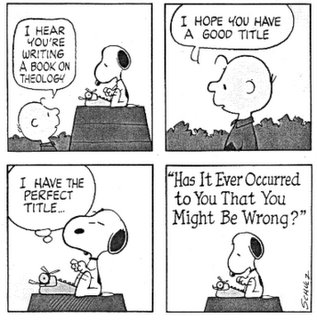

 It seems like there's a Walgreens or a CVS Pharmacy going in on every street corner out here in the west suburbs of Chicago. Honestly, right before we moved away from the Wheaton area there were three new Walgreens that went in within just a few blocks of each other. And now out here in Yorkville there are (or will be) three Walgreens within 5 minutes of each other.